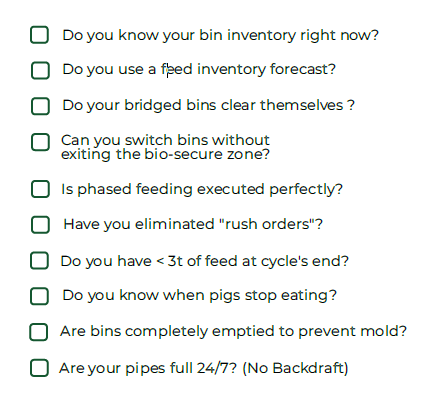
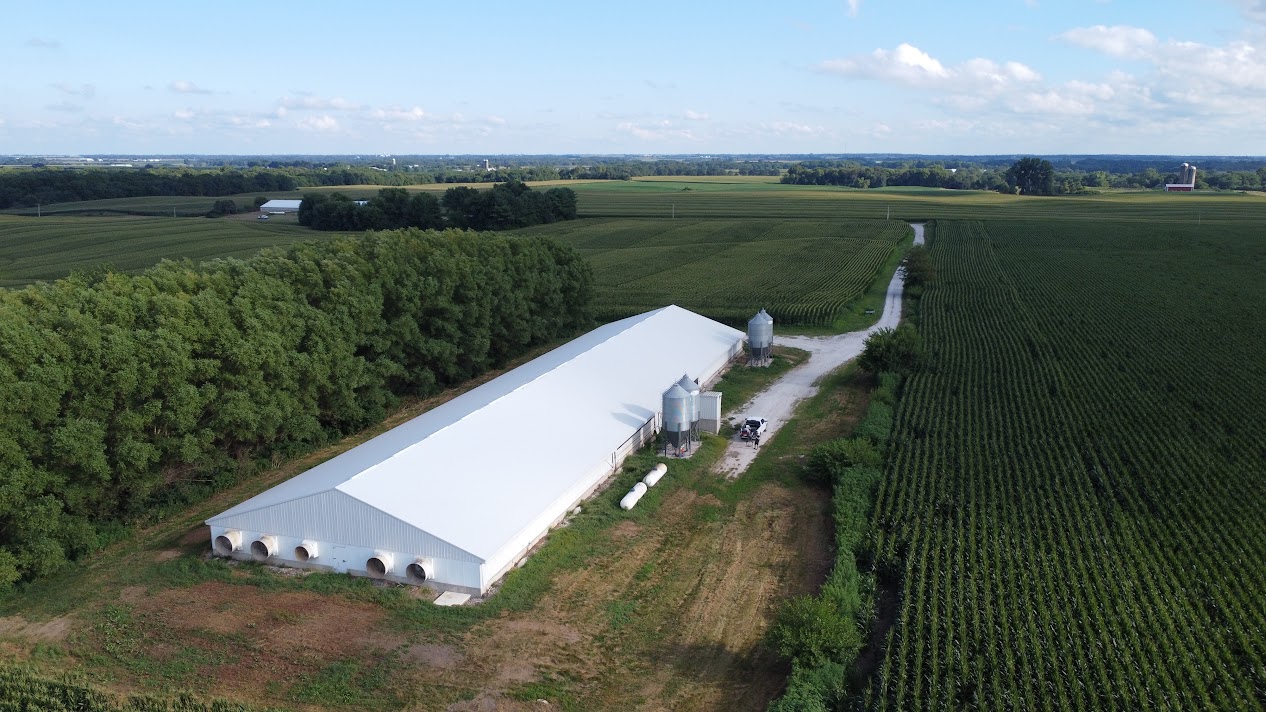
The Casey Test is a quick, simple, and admittedly sloppy way to measure the quality of your organization's feed management capabilities. Ten easy yes or no questions, designed by our CEO Casey Forsyth, will tell you if you have “Total Feed Control”, or if you are spending most of your time fighting fires and…. well… running out of feed.
The Joel Test is a famous set of questions that developers use to quickly rate the quality of a software team. Have they built good development processes? Or are they just surviving on caffeine, late nights, and fighting fires.
I (Casey, if that wasn't obvious) spent years using the Joel Test in my past life as a software developer, and recently started wondering:
What would the feed management version look like?
So, I came up with The Casey Test: a quick, simple, and admittedly sloppy way to measure the quality of your feed management capabilities. Ten easy yes or no questions will tell you if you have “total feed control”, or if you are spending most of your time fighting fires and…. well… running out of feed.
Give your team 1 point for every “yes” answer:
YourScore
10 - Perfect score: You’ve achieved Total Feed Control! You’ve built resilient systems, instead of relying on manual processes.
7–9 - Above average: You’re operating well, but there are still blind spots.
Most barns don’t score 10. In fact, most don’t even score 7.
The vast majority are probably operating somewhere around 0–3.
That isn’t because producers aren’t working hard. it’s because people have been forced to compensate for operational gaps with effort.
And effort scales poorly.
As labor becomes harder to find and margins get tighter, feed management must evolve from:
“Did we remember to check the bins?”
to:
“We have a system that keeps us on track”
That’s what Total Feed Control really means.
----------
1. Do you know your bin inventory right now?
Not approximately, and not "I could know in 20 minutes".
Feed is your largest operating cost, yet many sites still rely on estimates, gut feel, and occasional visual checks. If your team cannot confidently determine current inventory levels at any moment without physically checking bins, this should be scored a 0.
2. Do you use a feed inventory forecast?
Do you confidently know where inventory will be tomorrow? Next week?
Most sites don’t run out of feed because they forgot to check, they run out because they order using instinct, and thought they could make it through the weekend. If your organization is still primarily reacting to low-bin situations instead of proactively forecasting inventory, score this a 0.
3. Do bridged bins clear themselves?
If your standard operating procedure for bridging involves a hammer, broom, hockey stick, etc, the answer here is “no.”
A bridged bin should not require human intervention to restore feed flow, otherwise it can remain bridged for up to 24 hours.
4. Can you switch bins without leaving the bio-secure zone?
If switching bins in a tandem set requires someone walking outside to manually swap slides, there is friction built directly into the process.
Friction usually turns into delay and mistakes.
5. Is phased feeding executed perfectly?
Is Bin 1 always completely emptied before Bin 2 is started?
Or do both slides tend to stay open together for convenience?
Perfectly executed phase feeding means pigs receive the intended ration, at the intended time, without relying on manual timing or memory. If you can pull this off confidently and consistently, give yourself a1, otherwise, it’s a 0.
6. Have you eliminated rush orders?
Rush orders are typically symptoms of feed being ordered less than 48 hours before the requested delivery. If this is something you experience, even from time to time, there is room for improvement.
7. Do you have less than 3 tons of feed remaining at cycle’s end?
Too much leftover feed creates serious inefficiencies when mixed into new rations during the next cycle of animals.
Good feed management is not just avoiding outages, its also minimizing feed waste and reducing ration contamination between groups.
8. Do you know when pigs stop eating?
Feed intake is often the earliest signal that something has changed with animal health.
If your organization does not have access to real-time feed data, there is a good chance you are learning about problems later than you could be.
9. Are bins completely emptied between cycles to prevent mold?
Feed residue creates opportunities for mold, spoilage, inappetence, and inconsistent feed quality.
If bins are routinely carrying residual feed from one cycle into the next, score this a 0.
10. Are your pipes full 24/7? (No backdraft)
In negative pressure barns, empty feed pipes create another pathway for unfiltered air to enter the barn.
If your pipes are ever left empty due to outages, bridging, or poor feed management, it represents both a feed continuity issue and a potential biosecurity risk.
ABOUT THE AUTHOR
Casey Forsyth
Enjoyed this read?
Stay up to date with the latest video business news, strategies, and insights sent straight to your inbox!
Thank you! Your submission has been received!
Oops! Something went wrong while submitting the form.